Mobile and Social Media Journalism Blog
Newshouse School of Public Communications
JNL 461 Coursework
Business Owners’ Bravery & Brilliance
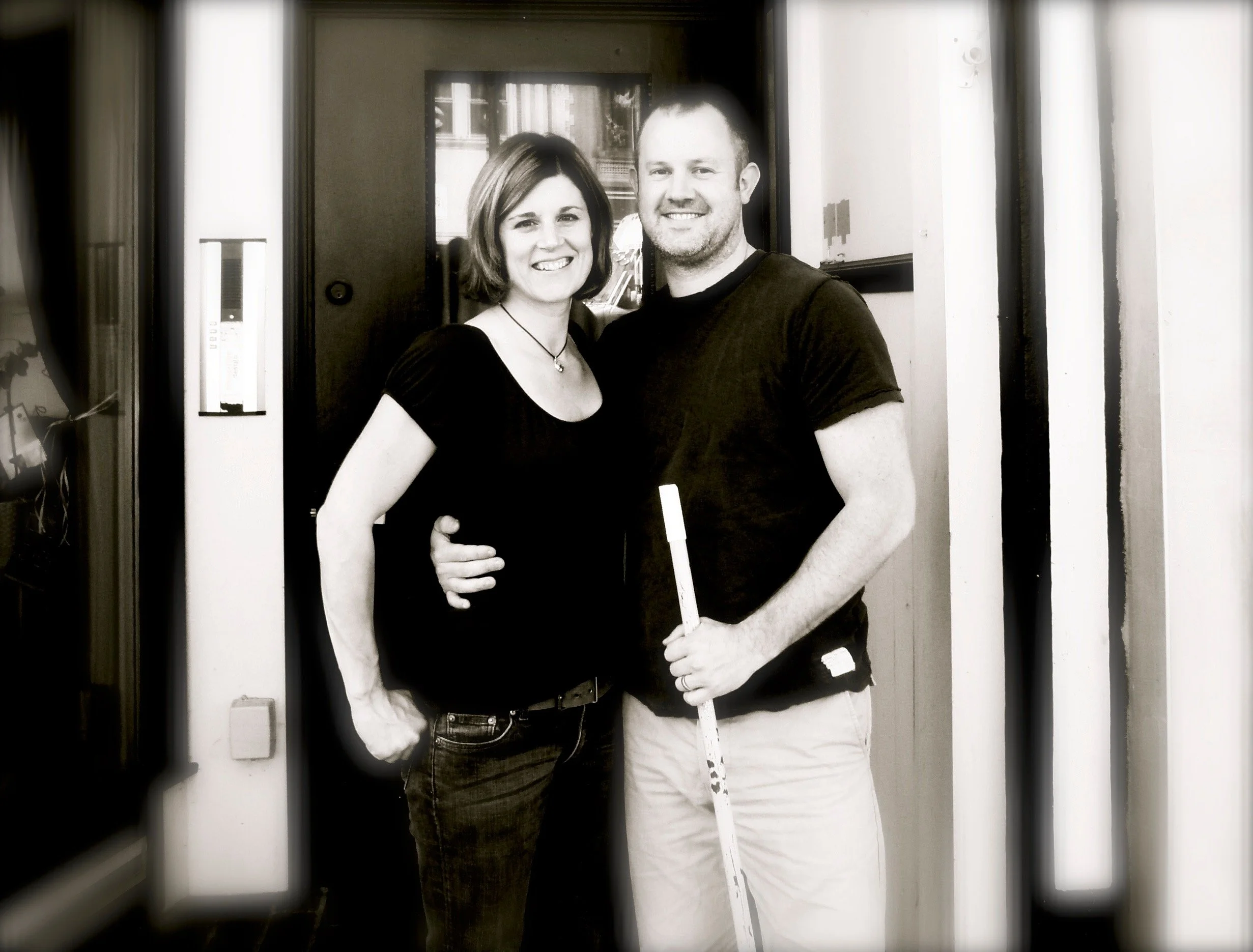
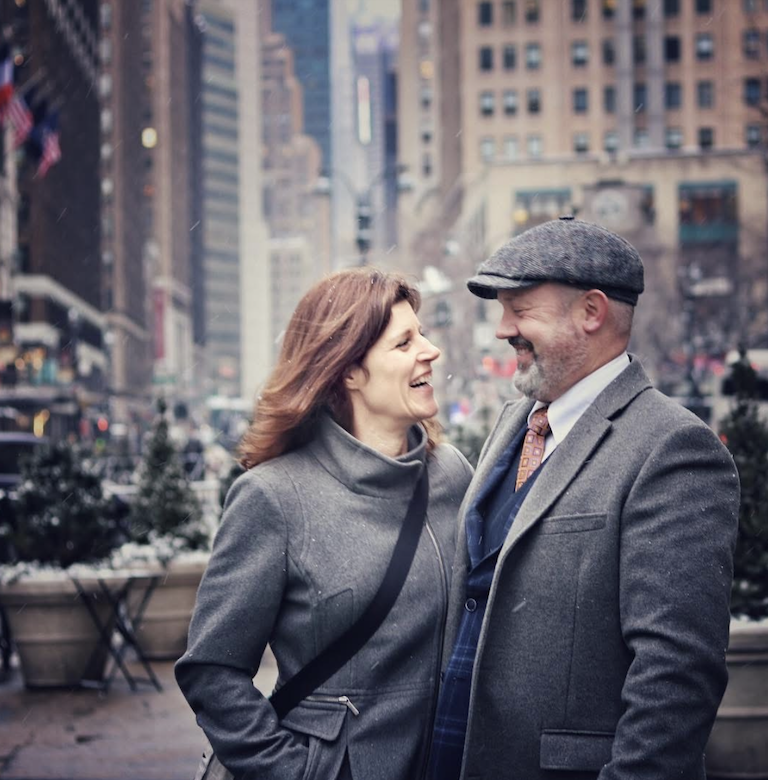
A love letter to the two business owners who raised me alongside a small marketing agency in the Adirondacks and gave me a life I never could’ve imagined
I grew up thinking that owning a business was normal. Spoiler alert: it's not.
As a kid, I thought everyone else's parents owned the businesses they worked for. Oh, your Mom is a doctor? She must own the hospital. Is your dad a cook at a burger joint? Must be his restaurant!
My parents have been business partners for over 20 years. I've watched their marketing business win awards, grow in our community, and expand far beyond what they originally planned. I've been there for every billing mistake, the 2020 layoffs, and the moments when business got personal.
Car rides were always shop talk; I knew every employee's name. I'd spend days in the office with my Mom when I went home sick from school. Dad would drag me to the ski mountain late at night to test out a new camera. Owning a small business was my entire life before I even knew how to spell business.
Now that I am just a few years younger than they were when they started their business, I'm realizing the intricacies of raising three children and running a small women-owned advertising agency in Upstate New York. Perhaps it's because I grew up canvassing with my parents at events and sitting in on board meetings with an iPad in hand, but I wholeheartedly believe that the strongest people on earth are business owners, and here is why:
The clock never stops.
My parents were -- well, are -- always working. Even on vacations, they're networking. When we watch the Super Bowl, Dad is taking notes on what companies did right and wrong in their million-dollar ad spots.
Owning a small business is not a 9-to-5; the work never stops. My parents were their own bosses; they had no one above them to handle the major issues that sprang up each day.
I think carrying that burden each day is incredibly difficult. My parents constantly had to make decisions without knowing whether they were the right ones.
As their child, I never really got to see the hard parts, or they handled them so effortlessly that I only noticed when everything was going well.
It's much easier to see now.

Resilience makes or breaks a business owner.
My incredibly talented, witty mother transplanted to the East Coast to work in theater. She built sets, directed crews, and kicked ass at Northeast theater festivals. Her strength left my father unable to form sentences when he first met her. He worked construction through college to pay for illustration classes in Rochester.
They didn't have it easy, and they certainly didn't make life any easier for themselves by starting an ad agency in a sleepy old town in the Adirondacks.
Resilience and bravery in the face of so many invisible, yet guaranteed, challenges are vital to a business owner's success.
My dad worked tirelessly on ad campaigns and rebranding packages; for hours, he'd stay late at the office; for days, he'd go on business trips to pitch potential clients. And he'd fail. Of course, he also succeeded, but the failing was the important part.
Failing meant he could try again or give up. Sean Magee doesn't give up; in fact, the phrase "give up" is absent from his vocabulary entirely.
Every day, my parents lived in limbo. My Mom never knew if she'd get a response to a cold email asking for a meeting, but that was the whole point. Nothing was ever about failing or succeeding; it was always about what she'd do next.
You learn something new every day.
I'm set to graduate in May 2028, and I'm not so scared of what comes after graduation- acquiring a job or figuring out where I can afford to live- but recently I have been afraid of losing something I've loved so dearly for the past 15 years of my life: learning.
My love for learning is something my parents instilled in me when I was growing up, scootering around their office and cheersing juice boxes against their college interns' beer cans. My work ethic came from them too.
I never let an opportunity pass me by, and I never pass up a chance to learn something new. Whenever I'm scared of a new opportunity, I think of my parents.
They built something from the ground up and learned how to make it work with every day that passed. My dad taught himself how to use Adobe programs to adapt to a digital wave of graphic design that captivated the industry. My Mom was ahead of the curve on Twitter and social media, garnering thousands of followers and a verification badge from her trials as a female business owner raising a family.
They didn't know what they were doing at the start. I never knew what I was doing at the start, but they were always willing to learn and improve to be the best business owners they could be, and I aspire to approach the world like that too.
Flip the switch.
The almost taunting motto my parents have used against my sisters and me whenever we find ourselves in the position to take a risk or face a challenging experience.
I always thought it was just something they'd say to hype us up before an audition or an interview, but I know they use it for themselves.
Imposter syndrome is real for business owners. Your employees, clients, finances, reputation- it all lies on your shoulders. Everything is dependent on you.
For my sake, I hope my parents were flipping the switch every day. They had to be locked in, supporting a family and a business, which is essentially like a fourth child.
Millions of people wake up each day and flip the switch; they prepare themselves to bear the pressure of so many outside sources. I think people underestimate the courage it takes to do that.
Work is fluid
When I think of a business, I think of an office with desks; people drink coffee and chat in the kitchen; every employee knows every employee's name and relationship status, and the name of their dog. It's a microcosm of like-minded people and, ideally, similar work ethics.
But a business is like the scene in Ratatouille where Remy, the rat, eats cheese and strawberries; there's an explosion of color, jazz music, then squiggles of color and French orchestral music. My parents' work was like a fictional, animated rat eating a deconstructed charcuterie board on some old lady's kitchen counter.
It made no sense, but it made so much sense at the same time!
My parents have had 30 clients at once and five at once. They've worked with hospitals and colleges, but love rebranding beer labels and collaborating with water slide companies.
They accepted the work that came to them and rolled with it. They worked late. They went on business trips. They put up with evil "dragon" clients. And dealt with local competition gracefully.
They sacrificed a lot. They spent their thirties driving us to school and driving employees to meetings. They stopped taking full paychecks years ago. Everything my parents have ever earned went back into the business, or into my sisters' and my.
But they have always made the work, work. No matter what the assignment, they make it feel like you're biting into strawberries and cheese.
I'm gritty and resourceful; perhaps thats why journalism works so well for me. But my ability to spin a story in a day, or work a room with my charm, comes entirely from the strong business owners in my life.
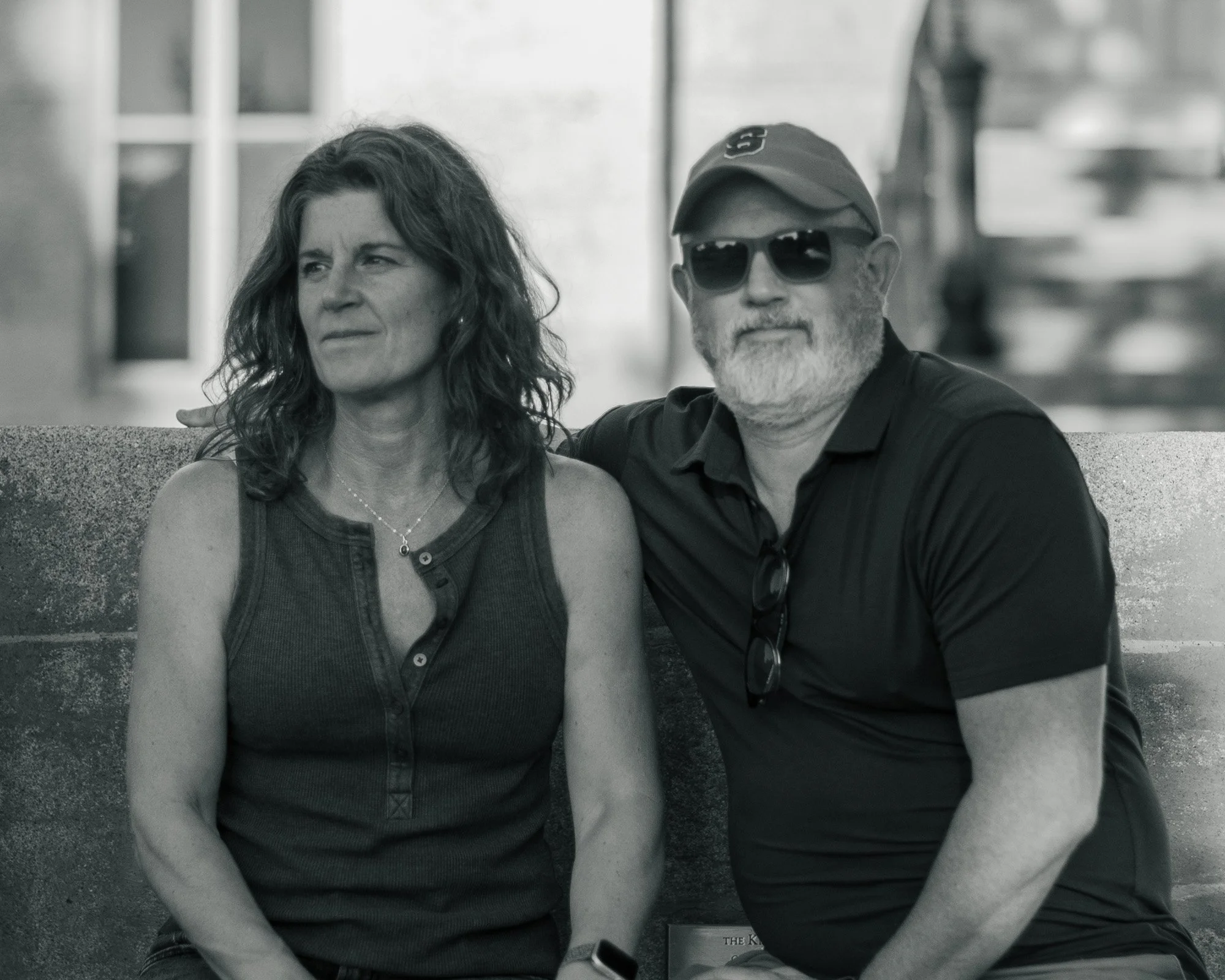
I have very rarely seen my parents at peace. It's a sad truth, but one that makes me so proud to be their daughter. They're hard workers who have earned everything they've been given in their two decades of running a business together.
I've had a front-row seat to the courage it takes to be a business owner, and I think I'm better for it.
So, Mom and Dad, who taught me how to build this website and proofread everything I have ever written, thank you for your sacrifice. Thank you for carrying the weight of being our parents and running a business. Thank you for leading with such prowess that it felt effortless. Thank you for teaching me to "flip the switch" and accept new learning opportunities whenever possible. Thank you for being you, and setting me up to be the best me I could possibly be. I hope to make my kids at least half as proud to be mine as I am to be yours.
Journalists do Business Now?
As independent journalism grows, reporters are being forced to learn the business side to keep their publications running.
Independent journalism is like sirens at sea, drawing fed-up reporters seeking guaranteed editorial freedom. No corporate executive tells you which stories are worth writing, and no family owner decides what fits its values; no need to draw up quarterly reports for shareholders. An independent journalist can decide what their audience needs to know and build a publication around that mission.
But as it often does, freedom comes with a price. And in journalism, it's a hefty one.
As newsrooms around the country continue to shrink, independent journalism has become an important part of the media landscape. Independent journalists (IJs) can do whatever they want: start a podcast, write a weekly newsletter, or use different social media platforms to reach different audiences. The opportunities to expand and experiment are endless.
IJs find a niche, whether it be Formula One fans or Italian food aficionados, and build their community around it. They find the groups overlooked by traditional media companies and deliver tailored content to their readers.
The bond between an IJ and their reader is closer than the relationship between traditional journalists and their audiences. Readers are an active part of the journalism delivery process... they're paying for it! Through subscription fees and donations, readers financially invest themselves in consuming the news. Although subscription and membership fees cannot support an entire business, they create loyalty between a reader and the writer.
A report by Nieman Lab found that only five of 43 independent information providers surveyed could fully fund their lifestyles through content creation income. Twenty-three said they could not fund their lifestyles through that income at all. Less than one-third had a formal or developed business strategy.
Being a good journalist and being a good business owner are two different things.
An independent journalist may know how to investigate a story and write compelling articles, but that doesn't mean they have the skills for budgeting, marketing, finding subscribers, selling sponsorships, applying for grants and managing finances.
IJs become more than just journalists; they become a Swiss Army knife of competence in trying to keep a business afloat.
Free Press Unlimited's research into independent media organizations found that outlets often rely on a mix of grants, advertising, and reader revenue rather than a single income source. Constantly finding new ways to make money helps diversify revenue opportunities but also creates new problems for IJs.
IJs often have very limited resources compared with major news networks. Without legal support, additional employees, or an editing staff, IJs have holes everywhere; once one is patched, something else falls through.
The future of independent journalism will not depend on readership levels and revenue; instead, it will depend on journalists becoming businesspeople. IJs must learn how to build businesses around the communities they serve. That means understanding audiences, experimenting with different platforms, and finding multiple ways to keep the lights on.
Being an IJ means more than being free from a corporate or family owner. It means taking responsibility for the entire organization.
The independent journalist of the future may have to be part reporter, part editor, and part entrepreneur. And if journalism is going to survive outside traditional media companies, learning how to be all three may be just as important as learning how to tell the story.
More than the Scroll
Social media is changing how journalists do their jobs, from finding stories and sources to figuring out how to tell them in a way people will actually stop scrolling for.
Adobe Stock Images
Social media journalism is one of the most misunderstood elements of modern journalism. In its name, it sounds like journalism posted on social media by happenstance. In reality, social media has changed much more than where people see the news. Now, journalists use social media to find stories, report them, tell them, and interact with their audiences.
Journalists can’t treat social media as an afterthought; it should be a part of the reporting process. The old idea that social media is something to use at the end of a story to promote it no longer holds up in this era of social media journalism. Social media can help journalists find sources, gauge what audiences are talking about, and discover interesting stories audiences care about. Social media is now a reporting tool, not just a story publicizer; journalists should use it as such.
At the same time, there is an important difference between being a journalist on social media and simply being good at social media. Someone can make a TikTok that gets thousands of views without doing any journalism. The challenge for journalists is figuring out how to keep what makes social media interesting without sacrificing accuracy or credibility.
That is especially important for student journalists. At The Daily Orange, for example, we are constantly thinking about how people will actually consume the stories we produce. A well-reported story might be published on the website, but that doesn't necessarily mean people will find it. Social media can bridge the gap between reporting and the audience. A strong photo, video, graphic, or short explanation can make someone stop scrolling and then lead them to the full story.
The visual side of social journalism stood out to me because of my photography background. Mobile journalism lets journalists report, photograph, record audio, edit video, and publish from essentially the same device. That creates many opportunities, but it also means journalists have to think visually from the start. Instead of asking only, “What information do I need?” journalists increasingly have to ask, “What will this look like?” and “What can I show the audience?”

Adobe Stock Images
Audiences on social media are more complex than those of traditional journalism. Social media encourages discourse and interactions between journalists and consumers. Audiences can respond immediately by asking questions and criticizing reporting. It's a two-way form of communication. Interactions with audiences can help identify new stories to cover, but constant communication also introduces a new level of danger when audiences trust what they discover online.
Just because something is going viral does not mean it is true. In fact, social media can make misinformation spread incredibly quickly. Journalists have to resist the pressure to post first when being first means being wrong. Verification becomes even more important when information is coming from eyewitnesses, anonymous accounts, or viral posts. Social media can help journalists find information, but finding something is not the same as confirming it.
Comparing TikTok and X is like comparing a tricycle with a monster truck. Journalists must understand each platform's culture and audience. TikToks require fast, attention-grabbing dialogue and visuals. Tweets need to deliver information plainly and quickly. Facebook posts appeal to an entirely different group of consumers than posts shared on Instagram. The story may be the same, but the social media posts cannot; journalists must keep that in mind.
Ultimately, social media journalism does not require journalists to become influencers. Journalists need to understand where their audiences are and meet them there. The most important part is still the journalism itself. Social media is a tool to amplify that, but it also provides more opportunities to get it wrong.
For me, the biggest lesson is that social media should not be seen as something journalists do after they finish their “real” work. It is becoming part of the real work. The best social journalism is not about chasing views for the sake of views. It is about using the tools people are already using to make good journalism more accessible, engaging, and relevant to the people who need to see it.
Small Businesses in Trump’s America
For small business owners, Trump’s tariffs aren’t just policy. They can mean higher prices, tighter margins and making difficult decisions to keep their doors open.

Adobe Stock Images
For small business owners, running a business has always meant dealing with uncertainty.
In business, everything is always changing: customers change their spending habits, prices go up, and competition grows. But under President Donald Trump's second administration, business owners face a whole new challenge: figuring out what new economic policies mean for them.
Tariffs and American manufacturing have become central to Trump's economic agenda. The goal is to encourage companies to make more products in the United States and reduce the country's dependence on foreign goods. For some businesses, that creates opportunities. For others, it is creating higher costs and more uncertainty.
The difference often comes down to what a business sells, where it gets its products, and how much it can absorb in rising costs.
A July report from the Federal Reserve Bank of New York found that most small businesses in goods and retail reported tariff-related financial challenges in 2025. Regional businesses struggled even more. Why? Small businesses generally lack the same financial cushion as large corporations.
A national chain can negotiate with suppliers or absorb a temporary cost increase. A small retailer ordering inventory from overseas may not have the same option.
Small business owners are forced to raise prices, accept smaller profits, or stop carrying certain products.
And raising prices can create another problem.
Consumers are already feeling the effects of inflation, so small businesses must weigh rising costs against customers' willingness to spend. The National Federation of Independent Business reported in August that small-business optimism declined slightly, while inflation remained one of owners' biggest concerns. The Wall Street Journal reported that 16% of small-business owners identified inflation as their top problem.
When business owners are forced to pay more for a product, the business raises its price to cover the cost. Customers notice the higher price and may decide not to buy it. The business then has to figure out how to stay profitable without pushing customers away.
In the eyes of Trump's supporters, tariffs benefit American businesses by encouraging domestic manufacturing that ultimately reduces competition from foreign goods. Additionally, the Trump administration cites tariffs and deregulation as ways to encourage investment in American industries. Reuters reported in August that administration officials argued these policies have helped attract foreign investment and strengthen domestic supply chains.
But those benefits do not necessarily appear immediately, especially for the small businesses at the end of the supply chain.
Business owners make decisions months or even years in advance. They have to decide how much inventory to purchase, whether they can afford to hire another employee, and whether they should expand. When tariff rates and trade relationships can change quickly, those decisions become harder to make.
That uncertainty is playing out beyond the largest American cities.
In Syracuse, small businesses are part of the same national economic story. From restaurants and independent retailers to contractors and other locally owned businesses, owners face the same questions as entrepreneurs across the country: How much will supplies cost? Will customers continue spending? And how much of those costs can a small business realistically absorb?
The Federal Reserve Bank of New York specifically tracks economic conditions in the Syracuse metropolitan area. Its research on tariffs shows how national economic policies can eventually become local business problems.
That is what makes small businesses an interesting way to look at Trump's America.
Tariffs are often discussed in terms of billions of dollars in trade, international negotiations, and large manufacturing companies. But economic policy does not stop at the border or inside a corporate headquarters. It eventually reaches the storefront.
A recent Associated Press report showed just how quickly that can happen. Trump's latest tariffs on Canadian goods have affected hundreds of products, including honey, makeup, hockey sticks, and electronics. Canada responded with its own tariffs on U.S. products, creating another layer of uncertainty for businesses that rely on cross-border trade.
For a small business owner, those policies are not simply numbers on a chart.
They can mean changing suppliers, adjusting prices, or telling a customer that a product is suddenly more expensive.
No single answer exists on whether Trump's economic policies help or hurt small businesses. Some owners may benefit from increased demand for American-made products or new domestic investment. Others may struggle with higher costs and unpredictable trade policies.
What is clear is that small businesses are often where national economic decisions become personal.
For the owner behind the counter, the question is not necessarily whether Trump's policies are working.
It is whether they can afford to keep the doors open while they wait to find out.